Showing posts with label mar roxas. Show all posts

Tuesday, April 26, 2016

WHY I AM VOTING FOR MAR ROXAS


EDUCATION

A well-educated leader, Mar Roxas graduated from the prestigious Wharton School of Economics at the University of Pennsylvania in 1979. As we all know, University of Pennsylvania is an Ivy League and it only takes the best of the best to be part of its student population. It’s a cutthroat competition to even get a slot in the school, let alone to successfully comply with the needed requirements to finish a degree. But Mar did. He has the brains and the background to be the best presidential candidate as he took up Bachelor of Science in Economics. He is a Wharton educated individual, trained in Economics. Education wise, you can’t top that. Is there anything better than an Ivy League school? None. He ranks first in this one.

CONSISTENCY

Unlike some candidates who lack consistency in terms of policies and programs, our guy has been consistent since day one. The strategies he advocated and the programs he pushed through are aligned to achieve one single goal – development for all. From his stint at the Department of Trade and Industry, Information Technology and Electronic Commerce Council and Task Force for Personal Computers, all were geared to the strengthening IT skills and foundation for the labor force to be highly employable. We need this often-disregarded trait. Consistency in terms of political agenda and programs has been lacking with the leaders of the country. We have to be consistent since it takes decades to see development and savor the fruits of our labor. The consistency that the country needs lie in these programs to assist the poor, provide infrastructures and develop skills, all which will not happen overnight and will take years in implementation. Consistency is needed since the leaders of the country should be on their toes, evaluating these programs and monitoring the progress; and at some point revising what needs to be revised and addressing the unforeseen needs. Mar had shown consistency at all times, and undoubtedly he will show it again.


EXPERIENCE
Being the best teacher, Mar had decades of exposure to both the legislative and executive branches of our government. He was the primary author of the Roxas Law of the Republic Act 7880 which revolutionized the education system of the country. He prioritized education by making sure that there is a fair distribution of budget among provinces. He also spearheaded the development of markets a.k.a palengke as the primary component of the country’s economy. He saw the promising contributions of small or big trading places as a catalyst to a robust economy. He saw the prospect; he paved the way to make these potential benefits possible. Finally, during his time at the Senate, he authored a total of 43 bills and brought 46 resolutions to the Congress. While during the 14th Congress, one of the most important of his legislative agenda was the Tax Exemption for Minimum Wage Earners Bill (Senate Bill No. 103).


CONTINUITY

Fighting for the same causes as with the Aquino administration, Mar Roxas is the beacon for continuity. We do not need a change in political administration – we need someone who will pick up from where the previous government left off and continue the programs as planned and implement new programs as needed. We have to be aware of the detrimental effects the we will surely encounter if there is a change in political administration especially to the economic performance of a country.
In this instance, if we voted for a leader that would stray away from the platforms of the previous administration, we will definitely lose the leverage we had for the past years. From a booming economy in the South East Asia, we will most probably start at ground zero again.

One does not need to be an economist to figure things out - continuity is better than change. Mar Roxas, undoubtedly, is the best man for the job at hand. With his experience working with the previous administration, he will be able to translate these rankings and rates into something that is tangible – a development that is seen and felt. We need a leader that is consistent with the policies of the Aquino administration. The country needs to be coherent in its infrastructure building, foreign policies and development programs. We need someone who will continuously build on what the past administration had already built, not someone who will destroy it in lieu for his own personal and political interest.

TACT

Among all presidential candidates, Mar remains humble and grounded. His work does the talking for him.  Under his belt are exemplary credentials that he accomplished as an excellent policy maker. Despite these, he does not go on a mud-slinging spree to be able to stay ahead of the game. He is the epitome of class in an almost class less roster of presidential wannabes. He embodies the character and strength an ideal president needs to have – grace under pressure, politically correct, long term vision and amiable policies. In the world of politics where playing dirty is the usual and popular norm, he chose to rise above these and continue to portray what a leader should truly be.


CONCLUSION

As a first time voter, it is easy for me to choose who my president will be. With proper research, investigation and study of the presidentiables’ platforms and in depth assessment of their characters; I can confidently say that my vote will remain significant if it is used for a person of high caliber and worthy character, in this case, Manuel Araneta Roxas II. He has all the trait and characteristics that an ideal president should be. He has more than enough experience in the government and the private sector. He showed consistency and reaped results for all to enjoy and savor. He is diplomatic in his ways and wise in his endeavors. He transcends beyond his pedigree and puts the country before his personal interests. What more can I ask from a leader? Nothing else. Nothing more. I vote for Mar. You should too.


Wednesday, April 13, 2016

Understanding OFWs: It Takes One to Know One


            One of my favorite authors of all time wrote, “If you want to know what a man’s like, take a good look at how he treats his inferiors, not his equals”


            Among the many commendable and well-thought platforms of the presidential candidates, I was struck by the Liberal Party’s standard-bearer Mar Roxas’ economic proposal pertaining to our overseas Filipino workers or OFWs. If successful in the recent campaigns, part of his program is “to create more domestic jobs so that working abroad will not be a necessity, but rather a choice for Filipino citizens; and when a Filipino opts to become an overseas Filipino worker, his/her welfare and protection will still be guaranteed by the government”.

                As a Filipino considering working and settling overseas, what does it mean to me and other potential OFWs? Simple – we will be properly and timely accounted for.

            This guileless albeit meaningful program for today’s modern day heroes comes from a deep root and exudes a lot of meanings. It is a common knowledge that majority of the Filipinos would want to work abroad, given the chance. In fact, a huge chunk of the Philippine population is currently scattered across all seven continents. Why is this alarming? Two words - brain drain.

            People often mistake “capital” as just money or financial investments. Sometimes, their definition of capital is tangible goods such as machineries and infrastructures that will be used to manufacture other goods and services. But they fail to consider the more profound concept, which is human capital. I am not simply pertaining to the number of laborers and migrant workers available in our labor pool, I am specifically relating to the knowledge and skill that they possess. 

            At a certain point in time, a worker can perfect a skill, which can cut down production time that leads to more products produced in less amount of time. Similarly, a worker, after hours of applying his or her skill, develops techniques and expertise that can be only be gained with time. In short, given time, a worker has the skill and knowledge comparable to a master craftsman. So, if they leave, they take the talent, experience and knowledge with them.

            What will happen to the country then? It will be a training ground for potentially productive laborers, but the ones who will be benefitting from the training and skill will be countries and corporations overseas. We will be a country of dregs.

            So where does Mar come in? After graduating from Wharton, he worked for almost a decade as an investment banker in New York. In fact, he was skilled and talented enough to be the assistant vice president of Allen & Company, a New York based corporation. During his stay, he was involved in mobilizing venture capital funds for small and medium enterprises.  As a former OFW, he is not new to the perils and challenges that other Filipinos faces everyday overseas. Most importantly he is at one with the most intimate desire of our OFWs – to bring a dignified life and better opportunities in our home country.

                
The adage “it takes one to know one”, therefore, perfectly sums up one of the numerous reasons why presidential candidate Mar Roxas is the perfect person for the job.

He is a person with vision as he has solid programs and policies that would make our country progress and prosper so that no Filipinos will be forced to leave their families and loved ones again. 

He is a person of experience as he was a former expatriate and very capable of addressing their needs and protecting their rights.

He is a person with impressive educational background that is necessary if we want long-term economic progress.

He is a person with proven track record in the government service. The laws that he fought for are now reaping social and economic benefits for millions of other Filipinos.

Finally, and most important one of all, he is one with the people.


Tuesday, April 12, 2016

HIS WAY OR NO WAY: A ONE MAN’S RULE

Recently, presidential candidate and Liberal Party standard-bearer Mar Roxas released lambasting statements about fellow candidate, Rodrigo Duterte saying that he is “a threatto democracy”.

The crux of the statements is that the latter, according to Roxas, practices a form of politics, which is his way or no way. Roxas also insinuated that when confronted with what is true, Duterte would answer with invectives, insults or bullets.


How true are these allegations?


Perhaps, Roxas, like many of our fellow Filipinos, is afraid of being subjected to a regime under a one man’s rule. For many years, the Philippines who fought so hard to achieve the elusive right to democracy, has been subjected to a military stronghold, bereft of democracy and freedom. This traumatic and unpleasant experience had molded the people’s minds into automatically rejecting any form of slavery towards unjust rule. Being the freedom lovers that we were born to be, we are in constant fear that the next leader to assume the highest position of the land will take it away, instead of protecting it.

Among the many statements released, what struck me most is the part when Roxas accused the current mayor of Davao City as “the judge, jury and executioner” despite the state of the country “we’re in a democracy”. What makes a country democratic anyway? Simply put, it is a government by the people or a rule of majority. Having had monitored the presidential campaigns closely, I was able to read a lot of articles involving the candidates. The issue that automatically made connection with Roxas’ claims is the extrajudicial killings in the south. Upon reviewing and rereading the articles again, the common denominators for these are, the alleged killings were done without the rule of law implemented. Backing up the issues with the reports from the Human Rights Watch, and the recently releases crime indexes and statistics by the Philippine National Police, it seems that there are many laws and rights being trampled upon with the so called practice of the rule of law. Instead, there is no rule at all.

What happens then to our country if one man’s rule is the rule for all? Chaos? Pandemonium? End of life as we know it?

No. There would be life, or a semblance of it. We will start living our everyday lives in constant fear of being mistaken for a drug user, or our daughters, sisters or wife being victims of the ghastly crime of rape and our sons, brothers and husbands being accused of drug dealers or pushers. Unsolved murders and killings may be a more common occurrence in our national news and media. If left unchecked, a single man’s way may be made toward his own personal interests or that of his families, colleagues and constituents. Anything can happen if one man’s rule becomes the rule for all. Most of these things, however, are at the detriment of a nation.

                                                   
Yes, we are in dire need of change. We have been craving for a leader that is worthy to govern the nation of heroes and great men and women. But how do we select it?  As one of the 21st century’s greatest author wrote, “If you want to know what a man is like, look at how he treats his inferiors.” Would you vote for a man who publicly came out and supported the killings of alleged criminals both minor and not by vigilantes in the form of death squads in his own city? Would you vote for a man who is a self confessed womanizer? Or a man who overtly sent expletives to the leader of the world’s 1.2 billion Catholics because of a traffic situation that is a normal scenario in a country?


By this time, we Filipinos should have learned our lessons from our past decisions. We do not vote based on popularity and we are not persuaded with flowery but empty words and promises. We are Filipinos, capable of making educated choices. We should vote for a leader that is first and foremost, respectable and gives due respect to all, may it be to people, or to the constitution.  

Wednesday, April 6, 2016

CAB MENTALITY: Conversation with a Smart Taxi Driver


I'm still undecided, so every time I get into a cab, I ask the driver who he's voting for. Today this dude SHOCKED me with his answer -- so impressive! I needed to ask him to start over so I I could tape it.Regardless of who you're voting for, vote as part of THE THINKING CLASS. Remember that these five candidates are campaigning to have power over us all, so ask the right questions and have sensible, coherent reasons for casting your vote.My new friend Virgilio ended by saying, "if Duterte or Poe win, I won't condemn them just because they're not my candidate. Whoever wins will be the President of the Philippines and no matter what I will always support my president."Now that's what it means to be a Filipino citizen. Well done, Virgil. 󾭻#halalan2016
Posted by Franco Mabanta on Friday, March 18, 2016


TV/Events host Franco Mabanta accidentally started a series he now calls CAB MENTALITY. For his first episode, a smart taxi driver named Virgilio revealed that he is voting for Roxas. The way he explained why he chose LP's bet left us speechless.

In his post, Mr. Mabanta posted and we quote:

My new friend Virgilio ended by saying, "if Duterte or Poe win, I won't condemn them just because they're not my candidate. Whoever wins will be the President of the Philippines and no matter what I will always support my president."
My wish is for every Filipino to analyze every candidate and refrain from giving in due to bullying as how supporters of some candidates are resorting to nowadays.

Kuya Virgilio, sana ma-interview din kita :)

Tuesday, April 5, 2016

Mar Roxas and the Yolanda fiasco: No One Will Ever Be Good Enough

One of the most undesirable traits we have as humans is our inability to be contented. The insatiable desires of something better, something more, and something fancier are the inevitable characteristics we can never let go of.


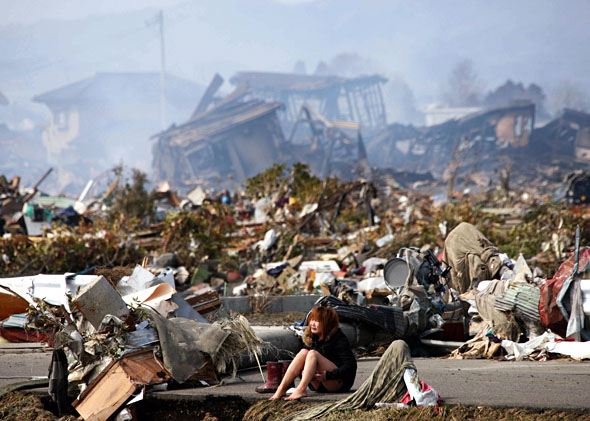
Tōhoku earthquake
which happened last March 11, 2011 in the pacific coast of Tohoku recorded a magnitude of 9.0. The earthquake which is referred to as the Great East Japan earthquake was the most powerful earthquake ever recorded to hit Japan. The tsunami caused nuclear accidents, particularly the meltdowns at several reactors in the Fukushima Daiichi Nuclear power Plant complex. Incidentally, this is the second worst nuclear disaster after the Chernobyl Incident. With approximately 20,000 deaths, 6,000 injured and 2,500 missing, it was one of Japan’s greatest challenges in the modern century.

            Naturally, in the spirit of compassion and camaraderie, Japan witnessed an influx on international aid. Volunteer workers flew from all over the world to help in the aftermath. Thousands of military, social personnel were dispatched to aid in the recovery and rebuilding. But the most remarkable thing about the incident, perhaps you might want to call it the silver lining, is the resiliency that Japanese people showed.
           
            Upon the incident, central government dispatched local authorities to contain the disaster. People were evacuated, some were quarantined, bodies were buried and medical aid distributed and made available. With the help of the government and the attitude of the affected locals, they were, albeit slowly, able to rebuild and restart their lives again.


            Now, you might be wondering, what is the point of this article? The Filipinos also suffered a similar catastrophic disaster – the super typhoon Yolanda.  Approximately 6,200 died, about 29,000 were injured and almost 2,000 missing.  3.5M families, 9 regions, 44 provinces and 12, 100 barangays were affected. Data came from the National Disaster Risk Reduction and Management Council (NDRRMC) as of January 2014.

            Unlike the situation that the Japanese were caught in however, the Filipinos who were similarly caught in a natural disaster responded otherwise. Obviously, they are two different races and thus have different values and outlooks. Naturally, the situation was handled far differently.


            I have watched an interview of presidential candidate Mar Roxas with CNN’s Andrew Stevens. In the interview, there is the growing anger about the government response, lack thereof to the calamity that struck the region. Mar Roxas, being the head of the Department of the Interior and Local Government that time was the recipient of wrath and frustration from local and national residents who are not satisfied with his leadership. In the interview, Mr. Roxas was put in the spot.  

            He however said that the entire force of government is looking after people, all forces whether physical or not were deployed and mobilized and that the need was beyond anticipated and finally, that they are doubling the response and supplies distributed everyday. The reporter criticized Mr. Roxas on a seemingly lack of coordination for immediate response in crisis like what is at hand. With calm and no resignation, he replied that which is true - local government is the first responder and what happened was even the local government units were swept away with the intensity of the typhoon.


            During the interview, he explained the allocation of the scarce resources, trucks, in order to meet the needs of the people immediately. With only 20 trucks that time, 10 trucks were allocated for food delivery, 5 trucks concentrated on clearing the street for trees and debris and the other 5 trucks were dispatched for cadaver recovery. Though several trucks were received for deployment from the private sectors after the interview, what was commendable was Mr. Roxas’ capacity to stand on his ground, exude grace under pressure and make efficient allocation of the minimal resources they have at the time.

           
From the point of view of a viewer, it is indeed overwhelming. Not even weather and atmospheric organizations with the latest and high tech machineries can anticipate the massive destruction that super typhoon Yolanda had brought. Even with proper preparation, it will never be good enough.

 Perhaps, one of the most difficult tasks to do is matching the help that came in with the help that is needed. There is no intention to criticize the respected Andrew Stevens, however, from Mr. Roxas’ side, it is indeed true that proper matching is crucial to meet the overwhelming demands of the victims. With the enormous help, donations from all over the world, both in cash and in kind, it is difficult to foresee where to allocate these, considering that the local government of Tacloban itself was wiped out. Thus it took more that the desired response time to mobilize the people from the most affected parts to the fringes of the regions. With aids and volunteers unfamiliar with the territory, and few or almost no local units to assist them (as even the local government officials were looking for their families and loved ones), response time would definitely suffer.      

            Also, unlike Japan, the country’s level of development is not at yet at par. Their methods, techniques, machines and capacity to overcome such a tremendous calamity is extremely enviable and admirable. People might have expected that just like Japan, the disaster that occurred back then was handled with ease and efficiency. But we are still far from that level of advancement. Until then, we still have tons to learn and capacities to tap and develop. Until then, we will strive to be just like them.

            This is not a matter of finger pointing or mud slinging. It has been two years since the tragedy occurred but a lot of controversies and hearsays still linger. Filipinos viewers from local and international were inexhaustible of opinions, while international spectators were easy to criticize the current government.  But can we too, just like Japan, be resilient? The commendable manner in which they handled the tragedy was what we should be aiming for. Instead of blaming on who underperformed and what went wrong, can we focus on what we can do better? Instead of concentrating on what they did during the Fukushima tragedy, can we also make our views wider and focus on what they did after the calamity struck – containment, rehabilitation and prevention.


Monday, April 4, 2016

Mar Roxas and The $25B Vision: Father of the BPO Industry in the Philippines

          As an economist, I have to applaud Mar Roxas for the projects that he spearheaded, monitored and accomplished.  Dubbed as the  “Father of the BPO Industry in the country”, he was one of the pionerring figures who established the now extremely successful IT-BPO industry. This industry alone already topped the remittances our OFWs send from all over the world.


            So how did it start?
 
            In the recently concluded ASEAN financial crisis where the economy of the entire region was down, presidential candidate Mar Roxas was talking over the telephone with a call center agent. The conversation was about a product that he bought. Then, just like any other once in a lifetime moment, a brilliant idea began to blossom in the mind of the humble yet capable Wharton-educated economist. He thought “this has great potential, why not bring it to the country?”. He thought that these off shore business, meaning off from the American soil., can be relocated here in the country.  And so he did.

            Then the Department of Trade and Industry secretary, he contacted the key leaders that would help promote foreign investments in the country, from there, he helped shaped the IT-BPO industry as we know it now.  He devised and oversaw the implementation of his 5 points strategic plan.


            First major step that he took was the strengthening of telecommunication infrastructure in the country. Interconnectivity is the primary key to attract these investors. With agreements with the nation’s top telecom providers – Globe and PLDT, they set up the cables and optic fibers as needed.

            Second and a crucial task is the education of people. Roxas, who was also the chairman of the Task Force for Personal Computers for Public High Schools Projects headed the distribution of PCs to enable the Filipino youth to be computer literate. The computers were used in both technical and practical skills such as hardware and software development. Reaping the rewards later in life, these students became part of the global pool for skilled workers hired by international and large corporations. He also met with the representatives from the country’s top universities such as the University of Santo Tomas and Far Eastern University regarding training for the people.

            Third, during the earlier years the country was bereft with both data and privacy protection, Roxas resolved this problem. Under his administration as the Chairman of the Information Technology and Electronic Commerce Council, he passed the E- Commerce Law or the Republic Act 8792 in the year 2000. Together with this, programs and policies that promote IT services were implemented.

            Fourth, Roxas lobbied the revision of the Republic Act 7916 in the congress. This means, that to attract more businesses, both buildings and floors in buildings are free to register as an ecozone therefore they can automatically receive the incentives. Not only that, promising BPO industries were immediately exempted from paying taxes – both local and national. The only crux is that they have to pay 5% of the company’s gross income as tax.

         When all the needed stages were properly laid out and open for businesses, promoting the Philippines as an up and coming IT hub with top notch facilities, skilled pool of labor capital and attractive environment for business, was the final step. Indeed the world recognized the Philippines as the place to settle in when it comes to BPO-IT industry.


            So, with this impressive history, how does Roxas fare as a probable president of the Philippines?

            I say very well. The history of BPO industry alone reveals a lot about the character of this Mr. Roxas. First, he has a vision. The light build moment of his while talking to a call center agent is now worth $25B. That $25B is brought about by roughly a million of BPO agents across the country. Statistics show that our revenues from these BPOs already exceeded that of the revenues from the millions of OFWs scattered around the world. That amount of foreign reserves will strengthen the position of the Philippine peso against the American dollar. That’s just the start of it.

            Next, Mr. Roxas has the consistency in terms of planning. He aligned his strategies and actions towards the vision of a Philippines with millions of employed Filipinos. All his programs, from being the Department of Trade and Industry secretary, Chairman of the Information Technology and Electronic Commerce Council and Chairman of the Task Force for Personal Computers were geared toward a specific goal that is the strengthening IT skills and foundation for the labor force to be highly employable. His works were an elaborate system of projects that paved way to the BPO-IT industry, as we know it.

             Finally, Mr. Roxas is the type of candidate that under promises but over delivers. Among all presidential candidates, he remains humble and quite, letting his work for the past decades to do the talking for him. His credentials are full of actual accomplishments – tangible and intangible, back upped with figures that are non refutable, not unlike other candidates whose claims are baseless and empty.

            So why would I, a first time voter, choose him as my president? He has the vision, he is consistent in implementation, and finally, he produces concrete results. That is what the country needs now. That is why we need Mar Roxas.
                    

SOURCES: